Chordates are defined as organisms that possess a structure called a notochord, at least during some part of their development. The notochord is a rod that extends most of the length of the body when it is fully developed. Lying dorsal to the gut but ventral to the central nervous system, it stiffens the body and acts as support during locomotion. Other characteristics shared by chordates include the following (from Hickman and Roberts, 1994):
- bilateral symmetry
- segmented body, including segmented muscles
- three germ layers and a well-developed coelom.
- single, dorsal, hollow nerve cord, usually with an enlarged anterior end (brain)
- tail projecting beyond (posterior to) the anus at some stage of development
- pharyngeal pouches present at some stage of development
- ventral heart, with dorsal and ventral blood vessels and a closed blood system
- complete digestive system
- bony or cartilaginous endoskeleton usually present.
The main classes of phylum chordate are Pusces, Amphibia, Aves and Mammalia
Class Pisces
These are fishes. A number of fishes have Skelton mad u cartilage and others made up of bone. They include catfish, Nile perch, lungfish, rayfish and dogfish.
General characteristics
- They have gills for gaseous exchange.
- Movement is by means of gills
- Their bodies are covered with scales.
- Have streamlined body.
- They don’t posses middle or external ear.
- Their heart consists of two main chambers , the auricle and ventricle with single circulatory system.
- Body temperature changes according to the temperature of the environment.
- Eyes covered with nictating membrane.
- They poses a lateral line system for sensitivity.
These include newts, salamanders, frogs and toads. They are partly aquatic and partly terrestrial.
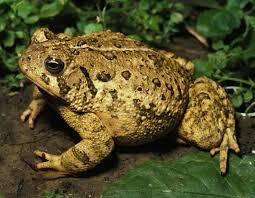

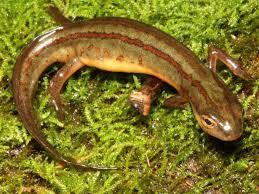
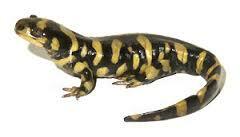
General characteristics
- They have fur well developed limbs.
- They have double circulatory system; their blood passes through the heart twice in a complete circuit through the body.
- They have a three-chambered heart with two atria and only one ventricle.
- They breed in water and fertilization is external.
- Gaseous exchange is through the skin, lungs and gills.
- They have two eyes and eardrum behind the eyes.
- They are ectothermic
Class Reptilia
Reptiles are more adapted to terrestrial life then amphibians. They include turtles and tortoises, crocodiles, lizards and chameleons.

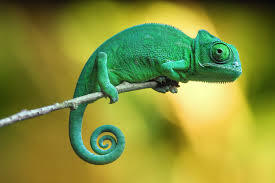


General characteristics
- The body is covered with dry scaly skin which reduces desicaton.
- Some have no limbs like snakes, others have four limbs eg crocodiles
- Fertilization is internal.
- They lay eggs.
- They have double circulatory system.
- They have well developed lungs for gaseous exchange, eliminating the need to use skin or the mouth for gaseous exchange.
- They are ectothermic
Class Aves
They comprise of birds.
Common birds include chicken, weavebird, hawks, eagles and turkeys. They are terrestrial and arboreal while some are adapted to aquatic life.
General characteristics
- Their bodies are covered with feathers.
- They have beaks
- They have hollow bones
- The sternum is enlarged to form a keel for attachment of flight muscles.
- The hind legs are for walking or swimming.
- The hind legs have scaly skin
- They have double circulation with four-chambered heart.
- They have lungs for gaseous exchange and air sacks which store air.
- They are endothermic
- Fertilization is internal.
- They have internal auditory meatus
Class Mammalia
These animals inhabit various habitats.
General characteristics
- They have mammary glands.
- Their body is usually covered with fur or skin.
- Their teeth are differentiated into four different types
- They have two pinnae (external ear)
- They usually have sweat glands.
- They have lungs for gaseous exchange.
- They have double circulatory exchange
- They have four limbs
- Have diaphragm that separate the body cavity into thoracic and abdominal cavity.
- Their brain is highly developed
- Have seven cervical bones at their neck.
- They are endothermic
In this article we will discuss about the classification of phylum chordata with its characters.
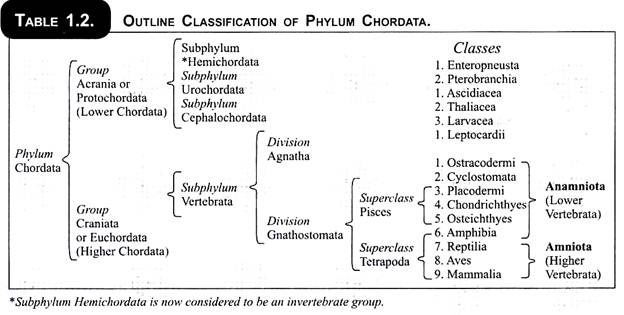
The chordates form a large heterogeneous group of members differing widely from one another in many respects. Due to great diversity in chordate forms, different schemes of classification have been proposed by a number of taxonomists from time to time. The classification followed is simplified and is a synthesis of most recent classifications. Table 1.2 gives an outline classification of the phylum Chordata.

No comments:
Post a Comment